Everyday Runners
A podcast about the feelings, things, practices and methods of running.
I interview experts and everyday runners about how they engage with and practice running.
This is a new podcast so I’m very keen to hear any thoughts or observations you might have about it. Perhaps you know of someone I should interview: a friend of yours, or, perhaps there is an elite runner out there who you think I should interview.
If you would like to get in touch, please send an email to readingsidewayspress@gmail.com
Listen on:


Episodes
Wednesday Oct 09, 2024
Wednesday Oct 09, 2024
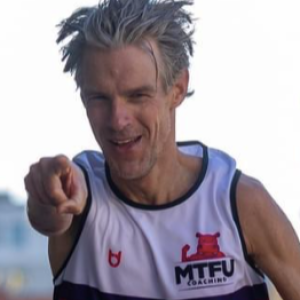
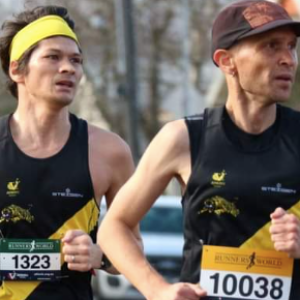
This episode, and the next, features a conversation between Niels Esmeijer and myself. Niels is the coach atMTFU, and he is also frequent pacer for athletes to reach their sub-2:30 marathon goals. His own PB is 2:25. Interestingly, he says that he races well when pacing others. But yes, as we keep saying, ‘times are only part of the story’. But, I guess, times are important for getting a ballpark idea about from which ‘running perspective’ one is coming from.
In this episode we discuss some of the pitfalls of doing a world major marathon in comparison to a smaller, local race; we discuss mileage versus efficacy and how to make sure you’re organised on race day.
Themes discussed:
Berlin: a spontaneous marathon?
Pacing athletes and racing strategy
Chaos in the last hour before the race and climbing fences
Problematic aid stations; hard plastic cups on the course
World major marathons or local marathons and races?
First time races: is it better to start smaller and ‘control the controllables’
Pre-race routine: doing it with friends or alone?
Practicing the race day experience: know what works for you
High mileage training: diminishing returns?
Running and life balance: life happens, but roll with it
“winning has a lot of definitions”
Mileage vs efficacy: mileage is important but it is not the be all and end all
*Photo used in episode image by Bjorn Paree @runoutofhell
***
Andy Fuller/Reading Sideways Press
Strava: Andy Fuller
Instagram: Everyday Runners Leiden
Twitter/X: @readingsideways
Email: everydayrunnerspodcast@gmail.com
Tuesday Oct 01, 2024
Tuesday Oct 01, 2024
Welcome to Episode 29 of Everyday Runners, I’m Andy Fuller. It’s still raining. I’m in the final stages for my Eindhoven marathon preparation. Some of you may have done Berlin. Others may be doing Amsterdam or Melbourne. Autumn is well and truly here.
Everyday Runners reached a minor milestone last week with the 3000th download. Just as in running, numbers don’t tell the whole story. I’ve had some very nice feedback from friends and fellow-runners who have told me that they have listened to and enjoyed a particular episode.
Also, on Saturday 28th, we held a running and drawing workshop at Garage art gallery in Rotterdam. This was a Reading Sideways Press event and it was a lot of fun to do some loopscholing, run technique exercises in an art gallery space. We then followed up with talking about running, bodies, movements. And of course, we then turned to drawing and talking about pens and pencils. The two activities melded into each other.
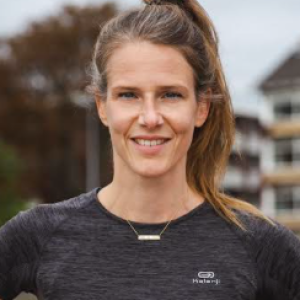
This episode features an interview with Mariska van Sprundel, a runner and science writer based in Utrecht. Mariska is the author of “Running Smart: How Science Can Improve Your Endurance and Performance”, or in Dutch, “Alles wat je wilt weten over hardlopen”. The book was translated by Danny Guinan, with funding from the Dutch Foundation for Literature. How cool that money was available for this. I first read the book way back in 2022 and I found it unusual as a running book for it was written in a cool-headed, unhyped manner. Mariska not only encourages us to be skeptical about many running hypes, but also to maintain our critical lens when engaging with science: there is always more to explore and one piece of research won’t provide, a single, all-time, forever-true answer.
I asked Mariska about: running shoes, running bodies, fatigue, injuries, therapy and strategies on how not to quit a race, when you feel like doing so. We also discussed her upcoming book on mental strategies in running, to be published by Volt next year.
Finally, if you are new to this podcast, please smash the review button on Spotify; share it with your friends and multiply it via your social media - if you like.
That’s all from me.
Until next time, doi doi-
***
Episode Overview
MvS as Science Writer; Runner; Bunny keeper
Motivation for Running
Festival vibe of running in NL
Shoes: how they matter
don’t believe the hype
Bodies and running
“but that doesn’t mean that you can’t run if you have another body type”
Are East African athletes ‘naturally’ good at running?
Gender and running
“you have to find a balance between finding a decent sports bra and being able to breathe”
taboo breaking
Do runners live longer?
But the thing is, is it running, or are there are other sports which could make us so healthy?
Where injuries happen
The virtues of beetroot juice
Running therapy
The rhythm of running
Being addicted to running?
How the book came to be translated into English
What are you writing about now?
forthcoming book/mental challenges of running and racing
performance vs joy
Positive or instructional self-talk
On not quitting
Relevant Links:
Mariska van Sprundel, website & Instagram
***
KWF fundraising for Eindhoven Marathon: KWF
Andy Fuller/Reading Sideways Press
Strava: Andy Fuller
Instagram: Everyday Runners Leiden
Twitter/X: @readingsideways
Email: everydayrunnerspodcast@gmail.com
Tuesday Sep 24, 2024
Tuesday Sep 24, 2024
Hello and welcome to Episode 28 of Everyday Runners, I’m Andy Fuller, host of the podcast and a co-founder of Reading Sideways Press.
This episode features an interview with Anne Luijten, a Dutch Olympic marathoner. Anne was also featured on Episode 12, where I spoke with her about qualifying for the Olympics and her running trajectory up until this point. So, it was only logical for me to invite her back on Everyday Runners so that we could discuss how her Olympics went.
Anne is definitely one of my favourite athletes - since before I met her, or before she qualified for the Olympics. I love the progress she has made as an athlete and how she is able to get the most out of her performance on race days. I like the minimum-of-fuss attitude Anne carries with her.
I cut out some of the small talk we were having before the start of the interview proper, so the recorded conversation starts with Anne and myself talking about a little niggle she is currently having.
I want to thank Anne for being on the show and for sharing her experiences.
Thank you to everyone who has been listening to the show. I always appreciate comments, feedback, thoughts from listeners/runners who have listened to the podcast.
Until next time --
*Photo courtesy of Anne Luijten
Friday Sep 20, 2024
Friday Sep 20, 2024
Hello and welcome to episode 27.1, I’m Andy Fuller, the host of Everyday Runners and a co-founder of Reading Sideways Press.
Firstly: I want to acknowledge the very nice conversations I have had with a few people about this podcast. It does mean a lot and it keeps me focused on staying steady with this project.
Secondly, there is a link in this week’s show notes for my fundraising for the KWF. If you are inclined to make a donation, I thank you kindly.
Lastly, I’ll be doing the Dam tot Dam on Sunday. This is a 16km race from Amsterdam to Zaandam. It’s the final preparatory race for me in my build up to the Eindhoven marathon which takes place on the 13th October.
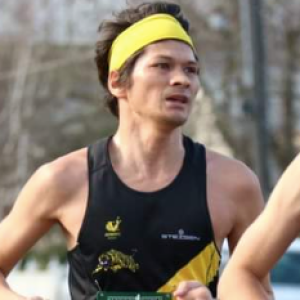
Anyway, this second part to the conversation with Joji Mori contains some pretty clear and pertinent insights into Joji’s take on running. He talks about his competitive nature; being an administrator and making the club more open and accessible for a greater range of participants, and finally, his thoughts on ‘how to make running better’ as a global sport.
That’s enough from me.
Until next time, doi doi!
Topics Covered:
On becoming an administrator: Creating spaces and environments
Who has access to running?
Walking
Beetroot, superfood
Joji Mode
Table Tennis
Playing within the rules of the sport, but not losing one’s competitive edge
Sifan Hassan’s finish
Favourite place to run in Melbourne
Daft Punk
Nerding it up on classical music
How to make running better?
**
https://acties.kwf.nl/fundraisers/andyfuller/eindhoven-2024
Tuesday Sep 17, 2024
Tuesday Sep 17, 2024
All of these episodes I’m doing, I guess, are personal. They represent my interest in running. This interest has been fostered through conversations with friends, other runners, athletes, coaches, and non-runners. I’m trying to pick up on threads of conversation and take them further; speak to a specialist or speak to someone who may have something specific to say about her or his own running career.
This episode is with a dear friend of mine: Joji Mori. After getting to know him and joining the club where he was based, he effectively became my coach, even though a guy called Neil Ryan, who is mentioned in this conversation, was the official coach. Joji and I lived close to each other so it was very easy for us to go on runs together. We did a lot of slow runs along the Yarra River from Richmond to Kew, Studley Park and beyond. We came up with the term ‘slowji’; which is a run, which is done at a very slow pace, generally in between tempo sessions. It is a combination of his name ‘Joji’ and the word ‘slow’. With the club, we would do Bush Reps: a series of 1km reps in a bushy, naturey park, just by the river. On Sundays, we’d drive out to Ferny Creek or to Lysterfield. Joji would sometimes drive in a straight line, while he balanced a coffee, a donut, or his phone and Spotify play list while driving.
With him as my coach, he brought my times down across all of my distances; from 5km to marathon. But almost needless to say, that is barely part of the story. While running with Joji, he taught me much of the local Melbourne lore of running; sharing stories about other runners and what to do and not to do. One of the things he first drilled into me was to not be obsessed by the marathon distance. Joji, of course, has his own take on how to train and prepare for races. He nutted out a time of 2:26 in the 2013 Melbourne Marathon, in the pre-Super Shoe era. Even though he has his preferred methods, I have also realised that he is not particularly dogmatic in his approach to running. Joji always emphasises to me though, the importance is consistency, sticking to a plan, and following what works for you as an athlete and how it relates to one’s family life.
I have decided to break this episode into two parts, since the original conversation went for more than one and a half hours and honestly I didn’t feel like deleting much of it. So, the second part will be published on Thursday.
Finally, I would like to thank everyone who has been listening and also those who have smashed one of the rating stars on the Spotify.
Also, included at the bottom of the show notes, is a link to the fundraising page I have started for the KWF, which is the Koningin Wilhelmina Fonds voor de Nederlandse Kankerbestrijding, which is the primary Dutch body which conducts research to combat cancer. If you would like to donate, I thank you very much.
Relevant Links:
Richmond Harriers
***
https://acties.kwf.nl/fundraisers/andyfuller/eindhoven-2024
Andy Fuller/Reading Sideways Press
Strava: Andy Fuller
Instagram: Everyday Runners Leiden
Twitter/X: @readingsideways
Email: everydayrunnerspodcast@gmail.com
Tuesday Sep 10, 2024
Tuesday Sep 10, 2024
Halo!
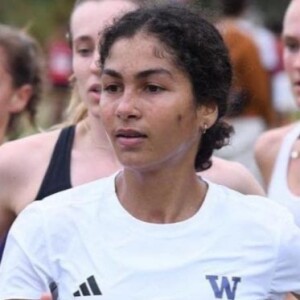
Amina Maatoug, who has recently moved to the University of Washington, as a student athlete, is one of the most popular athletes of Leiden Atletiek. She is renowned for her game face and fast finishes in which she generally picks off whoever is in front of her. Amina won the Dutch short track 800m in 2022 and, over the last few years has been based in the US: first at Duke University and now in Washington.
In this conversation, I talk with Amina about her running mentors, her training programs, her recovery from injury and how she manages to keep running fun and light, despite the pressures on performing well. Amina also shared her deep admiration for Muhammad Ali and how he stood by his principles in the face of much institutional hostility.
It was a lot of fun talking with Amina. Sure enough, it was a thrill to see her back in Leiden and tearing up the track over the summer break, which has now come to an abrupt, windy and rainy end. We wish Amina the best for the coming cross country season and for more good times at her new base.
Fijne dat je luistert, ik ben Andy Fuller, en de dag is Dinsdag tien September. Everyday Runners is een podcast van Reading Sideways Press.
doi doi!
Episode Outline:
On Harry Potter
Who is Amina Maatoug?
Transition from Leiden to Duke
The hills of Leiden
Consulting with her Dad over possible race times
Transition from Duke to Washington
Getting to know her new coach
Recovering from injury
Favourite running routes in Leiden
Upcoming Plans
Reflections on injury
On Muhammad Ali
On Faith Kipyegon
Monday Sep 02, 2024
Monday Sep 02, 2024
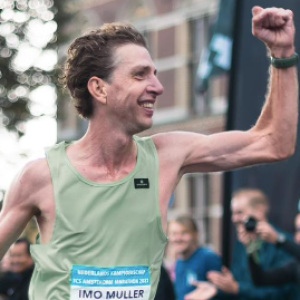
Imo Muller is a 2:25 marathoner, founder of Hardloopnetwork and the BIG10 and all-round running mover and shaker. I invited him to be on the show as I wanted to get a better idea about his projects and what is own running story is. Imo is not short on energy or running ambition. He knows the lay of the land well and what is attractive for runners in the Netherlands.
During our conversation, I talk with Imo about Dutch running culture, the popularity of running here, the legendary-ness of the incredible Sifan Hassan, the Rotterdam-Amsterdam marathon running conundrum and racing strategies, amongst other matters.
I hope that you enjoy this episode. If you do, smash the review button, spam your friends, write a letter, call someone on the telephone, or put a message into a pneumatic tube and send it on its way.
Run both wildly and with care, for both yourself and not for the kudos; for glory and for just for the sake of it.
Until next time, doi doi
Episode Outline:
Training for the Amsterdam Marathon
PB: 2:25 in Amsterdam in 2015, in the pre-carbon era
Who is Imo Muller?
hardloopnetwork.nl, Run Bites
Running as an easily accessible sport
Waiting to do a marathon until age 30
“When I did my first marathon, I was addicted.”
Marathons as a highlight of the year
Fooding and Carbon Plated Shoes
Indie Runner and the BIG10
The Olympics from a Dutch perspective
Sifan Hassan
Dutch marathons: Amsterdam vs Rotterdam
The Noise of Rotterdam
The virtue of quiet spaces during a marathon
Well-organised Dutch races
Bram Wassenaar: make sure that you will keep training
Racing strategies
Winning the Apeldoorn marathon
Relevant Links:
https://www.instagram.com/imomuller/
https://www.indierunner.nl/big10/
https://hardloopnetwerk.nl
runbites.nl
***
Andy Fuller/Reading Sideways Press
Strava: Andy Fuller
Instagram: Everyday Runners Leiden
Twitter/X: @readingsideways
Email: everydayrunnerspodcast@gmail.com
Monday Aug 26, 2024
Monday Aug 26, 2024
Hej hej!
Zlatan Ibrahimovic, Ace of Base, Saab, Spotify, Kent, Veronica Maggio, Neneh Cherry, Opeth, Roxette, The Cardigans and the wonderful word, ‘fartlek’ are some of the things I think about when I think of Sweden. But up until recently I had had virtual zero material contact with things Swedish - beyond ubiquitous, unavoidable flatpack Ikea furniture of course. One thing led to another, however and I ended up in Gothenburg for the World Masters Athletics Championships where I would do the 10km. I was excited to race there, for not only would it be my first international race, but there is also a historical connection between G-burg and one of my favourite cities, or well, at least a city where I have spent much time: Jakarta. The city, formerly known as Batavia, would serve as the blue print for the layout of the canals in Gothenburg. This was a separate fun fact for I could barely recognise the absolute distinctiveness of Batavia/Jakarta’s canals and those present in present day Gothenburg.
The inner city is spacious and pretty, with ample bike paths and trams. The harbour is visible from many spots. My feeling was that it was a flat-ish city: but then, I went to the course of where the 10km and half-marathon would take place. Expectations of a fast time went out the window. There would be barely a flat stretch along the course. No matter. This would mean my body would actually feel the difference of running here than in my new-homish terrain.
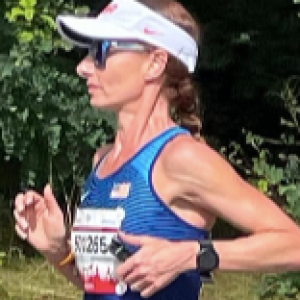
One afternoon, I got talking with another athlete who was staying at the same hotel. I made some general running chit-chat. And then: I thought, why not? I’ll ask the person, who I had only just met if I could interview her for this podcast. After all, the premise of this podcast is ‘everyday runners’: runners, who run regularly and meaningfully, with dedication and care. That Rebekah was in Gothenburg and competing in the cross-country and half-marathon events, and had only come late to running, was already signalling something to me. I had a gut feeling she would have an interesting story to tell.
I enjoyed this conversation very much. It went in different directions from what I thought.
I want to thank Rebekah for accepting my offer for being on the podcast when she could have easily told me, ‘no thanks’. I also of course want to say congratulations for her strong performances in both of her races. She was also helpful to me in getting me focused on my own race, by reminding me that hilly courses are part of the fun of running and racing.
Finally: if you’re new to the podcast, share it around and smash the review button in a positive manner.
Until next time, doi doi.
***
Show Overview:
On being a dancer
Boston Marathon, 2018
“I felt like I loved Boston, and Boston loved me back”
Running during Covid
Central Park Track Club
Running in New York
Running for the US T&F Masters Team
The pleasures of ‘rolling’ courses
On Masters Athletics in the States
***
Andy Fuller/Reading Sideways Press
Strava: Andy Fuller
Instagram: Everyday Runners Leiden
Twitter/X: @readingsideways
Email: everydayrunnerspodcast@gmail.com
Tuesday Aug 20, 2024
Tuesday Aug 20, 2024
Hej hej
Hello and welcome to Episode 23 of Everyday Runners. I’m Andy Fuller, host of the podcast and a co-founder of Reading Sideways Press.
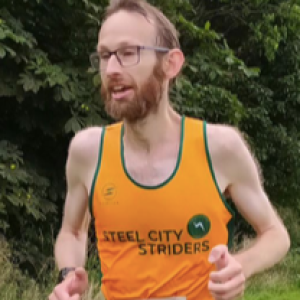
In the olden days, the marathon was seen by many as the ultra test of endurance running. City marathons have boomed. And, now, it is a mass sport with massive numbers of participants. But, another sport, or, separate type of event also exists: ultra-running, which is often performed outside of urban spaces. Events take place in mountainous regions along muddy and narrow trails. Athletes run hundreds of kilometers over many hours, carrying their own supplies or receiving them from a team of assistants. These are marathons cut loose from cities and which have their distances multiplied. Paces or speed are hard to put on a scale given the variations in terrain and elevation. I for one, haven’t done one. I’m a bit intimidated by the scale of time and training and distances involved. So, in order to get my head around this practice of running, I turned to Seth Kirby of Nottingham Trent University, who is a researcher of ultrarunning, event impacts and legacies as well as urban regeneration.
I hope you find this episode of interest, and as always, smash the review button on Spotify and multiply the episode through your social networks - real and virtual.
Doi doi —-
Episode Overview
Introduction
Sharing stories about what kind of distances we prefer
How important is smashing out a good race to you?
How did you come to studying sport and running in particular?
On Philly Bowden and sponsorship
The loneliness of the long-distance professional athlete
On Tom Evans
What kind of figures are charismatic in the ultra-running scene?
Brands and outspoken athletes
On Georgie Bell’s 1500m Bronze: coming back to running via Parkrun
The Commercialisation of Ultra Running
Monopolisation of trail running events
Inclusivity and ultra-running
Jasmin Paris and the Spine Race
Broadcasting and coverage of Ultrarunning events
The charm of ultras
Highlights of watching the Olympics
Relevant Links:
Seth Kirby, NTU, Instagram, Twitter
***
Andy Fuller/Reading Sideways Press
Strava: Andy Fuller
Instagram: Everyday Runners Leiden
Twitter/X: @readingsideways
Email: everydayrunnerspodcast@gmail.com
Monday Aug 12, 2024
Monday Aug 12, 2024
This episode is co-hosted with Maaike van Gelder, who was featured in Episode #8.
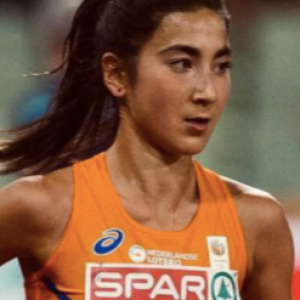
We talk with Jasmijn Lau, a 25 year old Dutch athlete, based in Nijmegen. We talk with her about how little she uses GPS watches, her processes of becoming a self-coached athlete, her recovery from a series of frustrating injuries and her more recent string of very strong performances. Jasmijn talks of her enjoyment of cross country and her favourite races throughout the Netherlands. Although I had her name and new of her times, this was my first meeting with her, so, it was great to learn more of her running practice. One of the main take-aways for me was her thoughts regarding racing and her casual attitude towards precise timing, in some of aspects her training.
It’s the day after the women’s Olympic marathon, so I want to give a shout out to Anne Luijten who came in 50th. Massive congratulations to her. If you are curious about her as an athlete, she was featured in episode #12.
As usual, I hope you enjoy this episode and until next time -
Topics Covered:
Introduction to Everyday Runners
“Nijmegen has the best races”
Half-marathons
“I especially like to to run championship races”
London: Night of the 10km PBs/Rome European Championships
Being a self-coached athlete
“More on possible half-marathons; and on ‘running a good one’”
10km in Valencia, PB while having a cold (but, not Covid)
Mindfulness
Using a GPS; Training by time
Instagram vs Strava
Favourite races in the Netherlands
Coming back from injury
Pre-race chilling
Relevant Links:
Jasmijn Lau: Instagram, Wikipedia, World Athletics
*The portrait of Jasmijn that accompanies this episode is by Dan Vernon (@danvernonphoto)
***
Andy Fuller/Reading Sideways Press
Strava: Andy Fuller
Instagram: Everyday Runners Leiden
Twitter/X: @readingsideways
Email: everydayrunnerspodcast@gmail.com